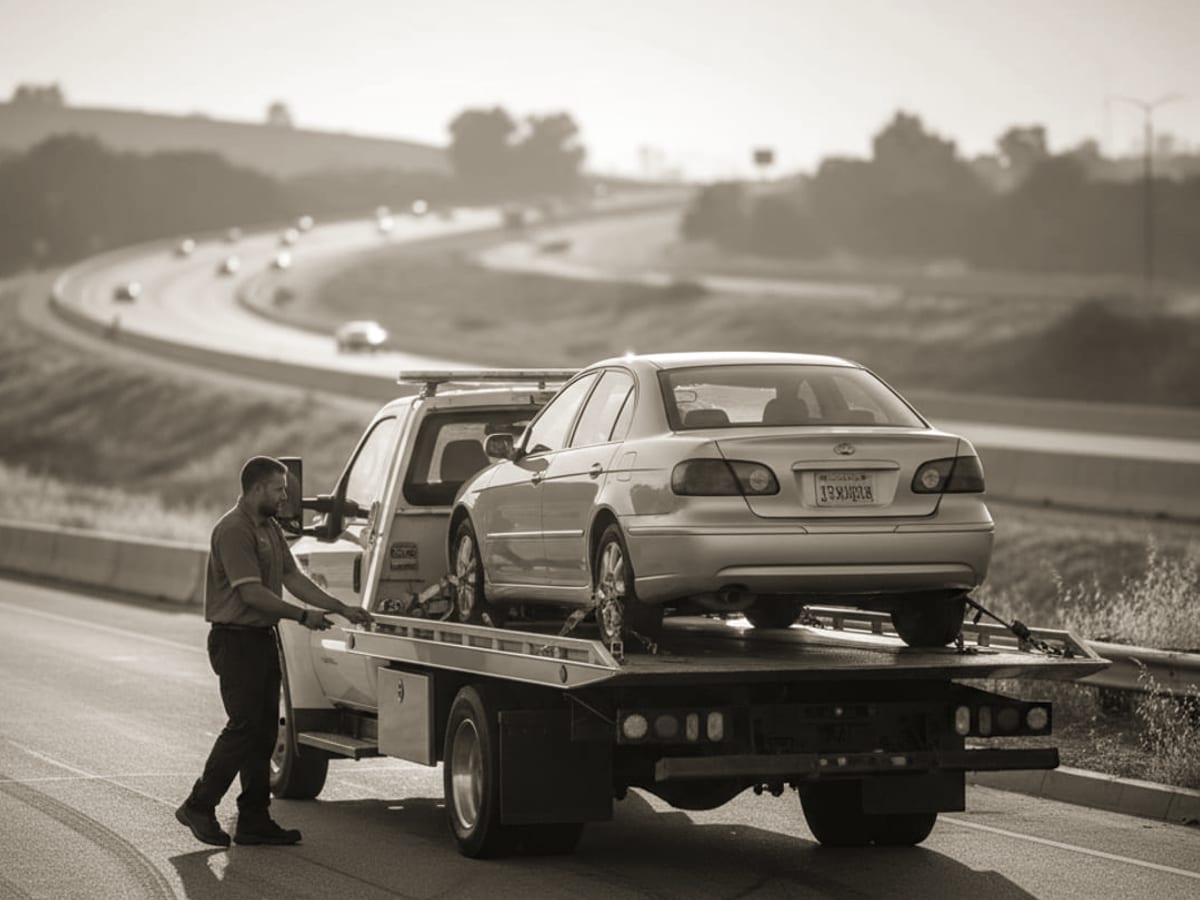
A long distance tow from El Paso is priced by the operator you hire, not by a state rate table, so the total depends on miles, empty return miles, truck type, vehicle size, state lines and timing. There’s no fixed price for a long distance tow from El Paso, so ask for one written flat total that lists what’s included before you book. A tow you call for yourself is a consent tow, and Texas price caps don’t apply to it. If the tow was not requested by the owner (a nonconsent tow), the tow portion is capped by City of El Paso Code Section 12.54.020 inside city limits or by TDLR’s statewide maximums outside them, and only a consent tow is priced freely by the operator.
Quick Tow EP is a referral service. It connects drivers with independent local tow operators. The driver hires and pays the operator directly, and the operator quotes the price. Quick Tow EP does no towing, roadside work or storage itself.
Why nobody in El Paso quotes a firm number on the first call
El Paso sits far from everything. Las Cruces is a short hop, but Albuquerque, Midland, Odessa, Lubbock and Austin are long hauls. An operator has to think about fuel, drive time, the return trip and whether another job waits at the other end. That’s why the first call often gets a range instead of a number.
Getting a firm quote takes a few details. Give the operator exact addresses, the vehicle, and whether it rolls. Then ask for one written flat total. If a quote is vague, ask what’s missing and what would change the number.
What actually drives the price
Miles and empty return miles
Distance is the biggest factor, but it isn’t the only one. A truck that drives from El Paso to Odessa and back has to cover the return miles too, and some operators build that into the quote. Ask directly: does this total include the return trip, or is it billed separately?
Flatbed or wheel-lift
A flatbed carries the whole vehicle on a deck. A wheel-lift lifts two wheels and tows the rest. Ask which truck is planned and why, and whether the flatbed costs extra. For a Tesla, the owner’s manual says to transport the car with all four tires off the ground and that a flatbed is the recommended method, so ask the operator whether a flatbed is available for that car. For more on this, see flatbed towing and wheel-lift towing.
Vehicle type and condition
A compact sedan, a lifted pickup, a van and an RV all load differently. A car that won’t roll, won’t start, or sits in a tight spot takes more labor. Say so upfront so the quote reflects it. For heavy or oversized vehicles, see heavy-duty towing and RV towing.
Crossing into New Mexico
A run to Las Cruces, Sunland Park, Santa Teresa or Chaparral crosses a state line. Texas TDLR rules and Texas statutes do not govern a tow, storage or registration in New Mexico; contact the agency or company that handled the tow and use NMMVD for New Mexico titles and registration.
Timing and scheduling
Ask the operator whether a flexible pickup date affects the price. Get any answer in writing before you book.
Tow, car transport carrier, or fix it locally
A long tow makes sense when the vehicle needs a specific shop, when it isn’t safe to drive, or when you’re relocating it. Repairing locally can beat a long tow if the fix is small and a good shop is close. Weigh the repair estimate against the tow total before you commit.
What insurance and roadside plans cover
Texas Department of Insurance explains that towing and labor coverage pays to tow your car if it can’t be driven, and pays for labor to change a flat or jump-start a battery, per the TDI auto insurance guide. The same source says the coverage has a dollar limit, the most the company will pay, and if the cost is higher you pay the difference. It also notes a company can refuse to renew your towing and labor coverage if you have four towing and labor claims in 36 months.
So check your per-tow dollar cap, not just the mile count. Then ask the operator whether they bill the overage only or the full amount upfront. Our post on whether insurance pays for towing in Texas goes deeper.
The steps to book a long tow right
- Gather exact pickup and drop-off addresses, including ZIP codes.
- Note the vehicle type, size, and whether it rolls, starts, or steers.
- Decide your pickup date and how flexible you are.
- Call and ask for one written flat total.
- Ask what’s included: hookup, miles, fuel, tolls, labor, return miles.
- Confirm the truck type planned and why.
- Check your roadside plan’s per-tow dollar cap.
- Ask whether they bill overage or the full amount.
- Take your own photos at pickup and drop-off.
- Ask the operator for proof of insurance.
- Arrange the receiving contact and key handoff with the operator.
- Get the quote in writing before you book.
Documents and details to have ready
- Registration or title, whichever you hold
- Your ID
- Insurance or roadside plan card and policy number
- Pickup and drop-off addresses with contacts at both ends
- Notes on damage or condition before the tow
- The written quote and the operator’s company name
- Ask the operator what paperwork you will sign at pickup and request a copy for yourself
Questions to ask before you book
Ask who actually does the tow. A referral service connects you, but the operator you hire does the work, so get that company’s name. Anyone can check a tow company or operator license with the TDLR License Search by name, license number, city, county or ZIP. Ask if tolls, hookup, miles, return miles, fuel and labor are extra. Ask what happens if your destination shop is closed on arrival, and agree on a plan. Confirm in writing where the car will sit if the shop is closed and who pays any storage. Ask the operator for proof of insurance and confirm in writing who is responsible during the tow. Ask about cancellation and no-show terms, and what happens if the driver demands more at drop-off. If the operator cannot make the scheduled pickup, call the tow company you hired using the number on your written quote, and keep the quote for your records.
Texas caps don’t apply here. The Texas Department of Licensing and Regulation caps cover nonconsent tows, like private property tows, and a tow you call for yourself is priced by the operator, per TDLR’s towing consumer page. For comparison, a nonconsent tow of a vehicle up to 10,000 lbs is capped at $100 inside El Paso city limits under City Code Section 12.54.020 and at $272 under TDLR’s statewide maximum outside city limits, and Texas Occupations Code Section 2308.2065 bars charging above the set fee for those tows, per Chapter 2308. Those figures don’t set your long tow price.
Compare two or three operator quotes side by side. Look at the total, what’s included, insurance proof and the truck planned, not just the headline number.
Frequently asked questions
How much will it cost to tow my car that far?
There’s no single number. A consent tow is priced by the operator, and the total depends on miles, return miles, truck type, vehicle size, state lines and timing. Ask for one written flat total and compare it against what’s included.
Can the operator give a flat price before pickup?
Yes, ask for it. Give exact addresses, the vehicle details and whether it rolls, then request the total in writing before you book. A firm quote should state what’s included and what costs extra.
Does my roadside plan cover a tow that long?
It depends on your plan’s dollar limit. TDI says towing and labor coverage has a dollar limit, and you pay the difference above it. Check your cap before you book, and ask the operator how they bill the overage.
Will the operator use a flatbed for my car?
Ask the operator which truck is planned and why. For a Tesla, the owner’s manual says a flatbed is the recommended method, so confirm with the operator whether a flatbed is available and whether it costs extra before you agree.
Is it cheaper if I schedule it a few days out?
Ask the operator. Get any scheduling discount in the written quote.
What’s included in the quote, and what costs extra?
Ask specifically about hookup, miles, return miles, fuel, tolls and labor. Get the answer in writing. Anything not listed is a question to resolve before the truck moves.
When to call for a tow
Call when the vehicle can’t be driven safely, needs a shop far from El Paso, or has to cross into New Mexico. If you are stranded after a crash, note that under City of El Paso Code Section 12.54.070 a tow company may not show up at an accident or incident scene unless contacted by police, the owner, the driver or the insurer, so call the operator rather than wait for one to appear. A long run needs an operator with the right truck and clear paperwork. Quick Tow EP is a referral service that connects callers with independent local tow operators who quote and perform the tow. Call (915) 320-5573 and Quick Tow EP will connect you with an independent local tow operator.